In this article, I want to share my personal journey with gluten-free products. Is it truly a healthy alternative? Let’s break down where the real benefits lie, where the "hidden traps" are, and what you should look out for to maximize the health of yourself and your family.
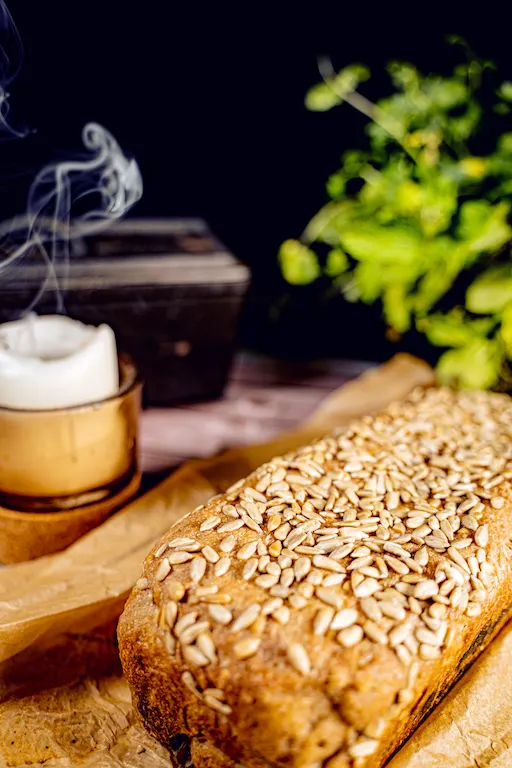
The Undeniable Pros of Going Gluten-Free
- Digestive Ease: For those with celiac disease or gluten sensitivity, the benefits are immediate: a feeling of lightness and the disappearance of that uncomfortable "heavy" sensation.
- Dietary Variety: Switching to gluten-free flour opens up a whole new world of ingredients. By using almond, rice, oat, amaranth, or chickpea flour, we introduce a variety of micronutrients and vitamins that refined white wheat flour simply lacks.
- Physical & Mental Clarity: Many people notice that cutting out gluten leads to effortless weight loss, clearer skin, and—most importantly—the lifting of "brain fog."
The Challenges of a Gluten-Free Diet
- The Learning Curve: Gluten-free baking can be tricky. Without gluten, textures can often turn out crumbly or dry. But don't give up! With a bit of experience, you’ll master the technique.
- Cost: We can’t ignore the price tag, especially when working with premium nut-based flours.
- Industrial Ingredients: This is the most "painful" point—the composition of store-bought GF products. We need to look at this separately.
The "Supermarket Trap"
When I began my wellness journey with a detox supervised by a doctor and nutritionist, cutting out gluten was mandatory to reduce inflammation in the gut lining. Back then, I thought: "No problem, I'll just buy the gluten-free version at the supermarket."
This is a trap. Often, processed gluten-free baked goods are actually worse than regular ones. Here is why:
- Starch Overload: To make products look aesthetically pleasing, manufacturers use corn, tapioca, or potato starch. These have a very high glycemic index, causing massive blood sugar spikes.
- Excessive Sugar: To compensate for flavor, these products are often loaded with sugar.
- Additives: Industrial thickeners and emulsifiers can be very harsh on our gut microbiome.
"Always read the label. If starches are the first ingredient, you aren't buying 'health'—you’re buying marketing."
A Conscious Path
My journey toward conscious eating wasn’t a quick trend; it took years of trial and error. The most important lesson I learned was to listen to my body.
Gluten intolerance isn't always obvious. It’s not always immediate stomach pain; it can be a silent, low-grade inflammation that builds up over years. When I realized that a simple bun could drain my energy for the whole day, I decided to cut it out. But I didn't want to give up life's little pleasures—and that’s how my journey as a gluten-free baker began.
What’s Next?
Gluten-free baking might seem daunting, and I can't cover everything in one article. However, I plan to gradually share my recipes and experience to show you that life without gluten is NOT a life without pleasure.
In future posts, we will explore:
- How to bake bread that is both healthy and delicious.
- Secrets of working with different flours and how to substitute ingredients.
- The "Gold Standard": Learning to bake with sourdough for maximum gut health. s Together, we will learn how to choose the best for ourselves, focus on clean ingredients, and cook with love for our bodies.